Shandong Agricultural Engineering College's Rural Revitalization Research Institute inspected a flood-tolerant green onion breeding and commercialization project at Jinan Agricultural Park
On October 30, 2026, a delegation led by Liu Wenbao, Director of the Institute of Rural Revitalization at Shandong Agricultural Engineering College, visited the Jinan Agricultural Demonstration Park for an inspection and exchange. Researcher Shao Changyong, Chairman of Shandong Province Seeds Group Co., Ltd., along with members of the company’s research, production, and marketing teams, accompanied the delegation during the visit. They conducted on-site research and held discussions regarding the joint project—'Breakthrough Breeding and Industrialization of New Flood-Tolerant Green Onion Varieties’—aimed at enhancing the innovation capabilities of technology-based enterprises in Jinan.
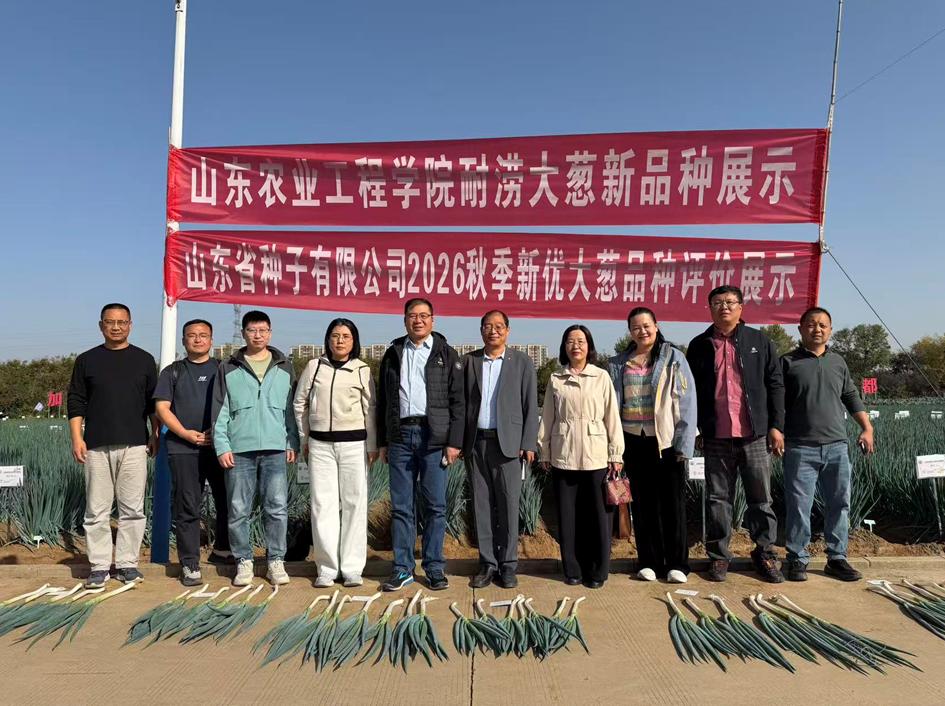
Guided by Researcher Shao Changyong and technical staff, the delegation inspected the field performance of the test varieties plot by plot, carefully comparing each variety’s plant height, the length and thickness of the white stem, leaf color, disease resistance, and tolerance to waterlogging, and conducted on-site evaluations of the harvested Welsh onions. Technical staff from both sides discussed issues such as the phenological stages of the varieties, their stress tolerance, and their suitability for cultivation while observing the fields. They recorded the actual performance of each variety under this fall’s climatic conditions, one by one, to gather firsthand data for subsequent variety selection and regional trial evaluations.
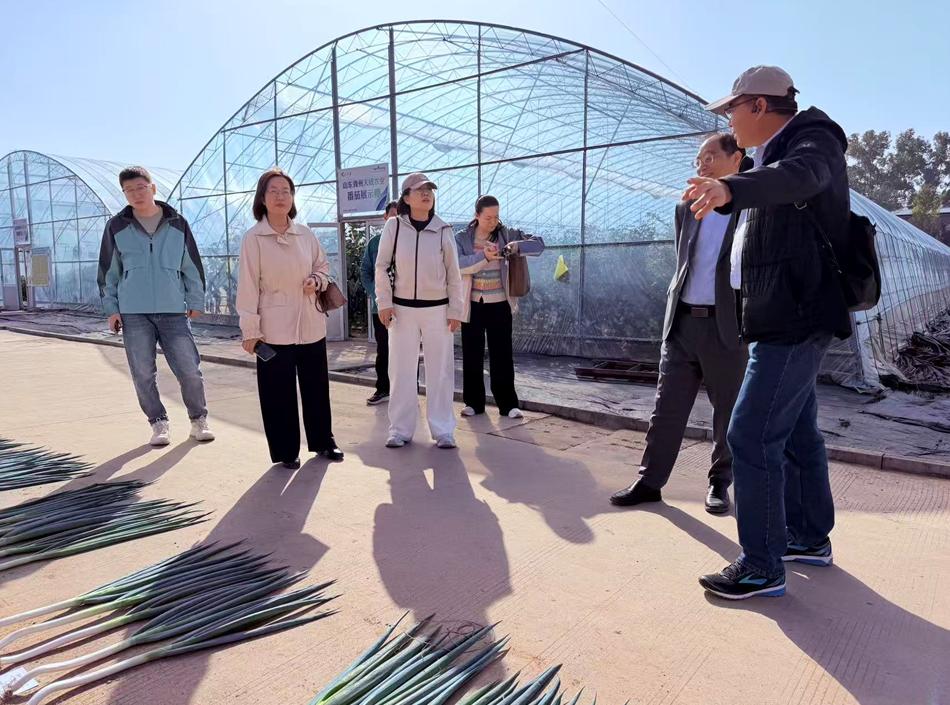
Welsh onions are an important specialty vegetable crop in Shandong. With a large scale of cultivation and a long industrial chain, they play a significant role in increasing farmers’ incomes and promoting regional agricultural development. However, in recent years, extreme weather events such as heavy summer rainfall and waterlogging in fields have become increasingly frequent. The problems associated with Welsh onions—namely, their shallow root systems and low tolerance to waterlogging—have become increasingly prominent. Waterlogging-induced root rot, seedling death, and yield losses have caused significant financial losses to growers, making the breeding and promotion of breakthrough new Welsh onions varieties that are tolerant to waterlogging, disease-resistant, and high-yielding an urgent need for the industry.
During the project exchange session, Researcher Shao Changyong welcomed Dean Liu Wenbao and his delegation and outlined the company’s progress in the collection and identification of Welsh onions germplasm resources, the breeding of new varieties, the propagation of high-quality seeds, quality control, and the development of a market promotion system. Referring to the project proposal, the two parties reviewed, one by one, the interim results of various stages—including the development of flood-tolerant Welsh onions parental materials, combination selection, variety comparison trials, and demonstration and promotion—analyzed the strengths and weaknesses of the current breeding materials, and clarified the breeding objectives and trial arrangements for the next phase.
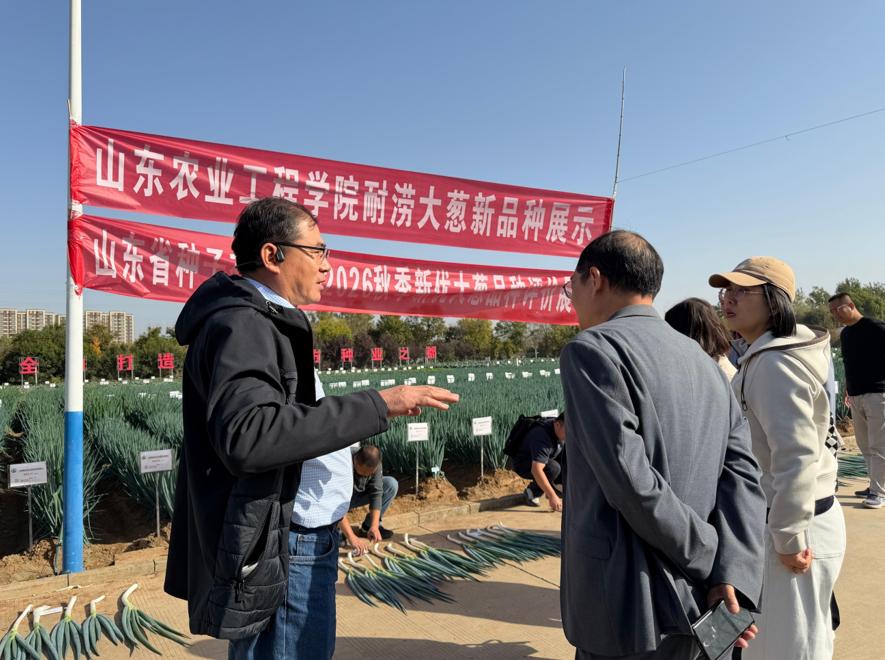
Dean Liu Wenbao commended the progress made on the project and stated that the university would continue to leverage its strengths in germplasm innovation, experimental research, and talent development, while maintaining close collaboration with enterprises to transform laboratory findings into high-quality varieties that are suitable for field use and recognized by the market. Both sides agreed that it is essential to remain guided by market and production needs, to prioritize flood tolerance as the core criterion in variety breeding, and to simultaneously take into account yield, quality, and marketability, thereby accelerating the breeding process for breakthrough varieties.
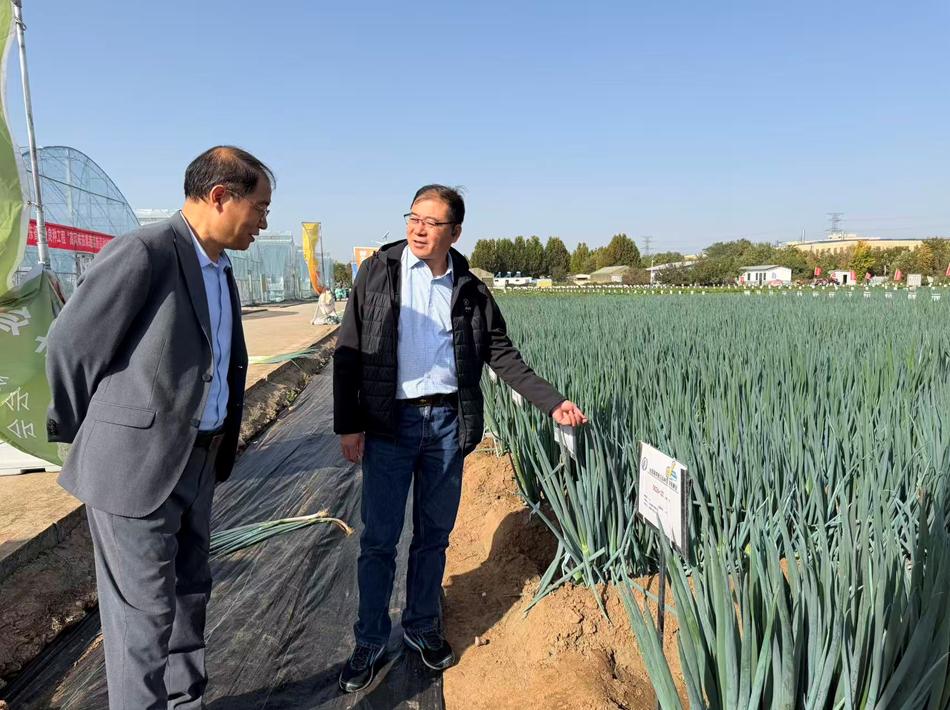
During the symposium, the two sides also exchanged views on matters such as the commercialization of research findings, the construction of demonstration bases, the establishment of seed propagation systems, and the extension of technical services to the grassroots level. Building on our company’s strengths in high-quality seed propagation, distribution networks, and industrial operations, we will collaborate with universities and research institutions to conduct regional trials and demonstrations of new varieties, as well as seed propagation, processing, and market promotion, thereby accelerating the implementation of research findings in the field and ensuring they benefit farmers.
Next, the two parties will continue to deepen collaborative innovation among industry, academia, and research institutions; accelerate the screening and evaluation of high-quality, flood-tolerant Welsh onions combinations; and refine the evaluation system for variety resistance and yield potential. They will also further expand the scale of demonstration plantings to verify the adaptability of the varieties at multiple locations; Actively promote the integration of supporting cultivation technologies and the pairing of high-quality varieties with optimal cultivation practices to lay a solid foundation for the industrial-scale promotion of these varieties; continue to establish a routine coordination mechanism, hold regular meetings to discuss project progress, and ensure that all tasks are completed to a high standard by their respective deadlines.
This visit has charted a clear course for the further advancement of the joint project between the two parties. Shandong Province Seeds Group Co., Ltd. will use this project as a platform to further deepen collaborative research with universities and research institutes, accelerate the development of a series of breakthrough new varieties of Welsh onions that are flood-tolerant and suitable for mechanized cultivation, and contribute to improving the quality and efficiency of Shandong’s Welsh onion industry, ensuring stable vegetable production and supply, and supporting rural revitalization.


